
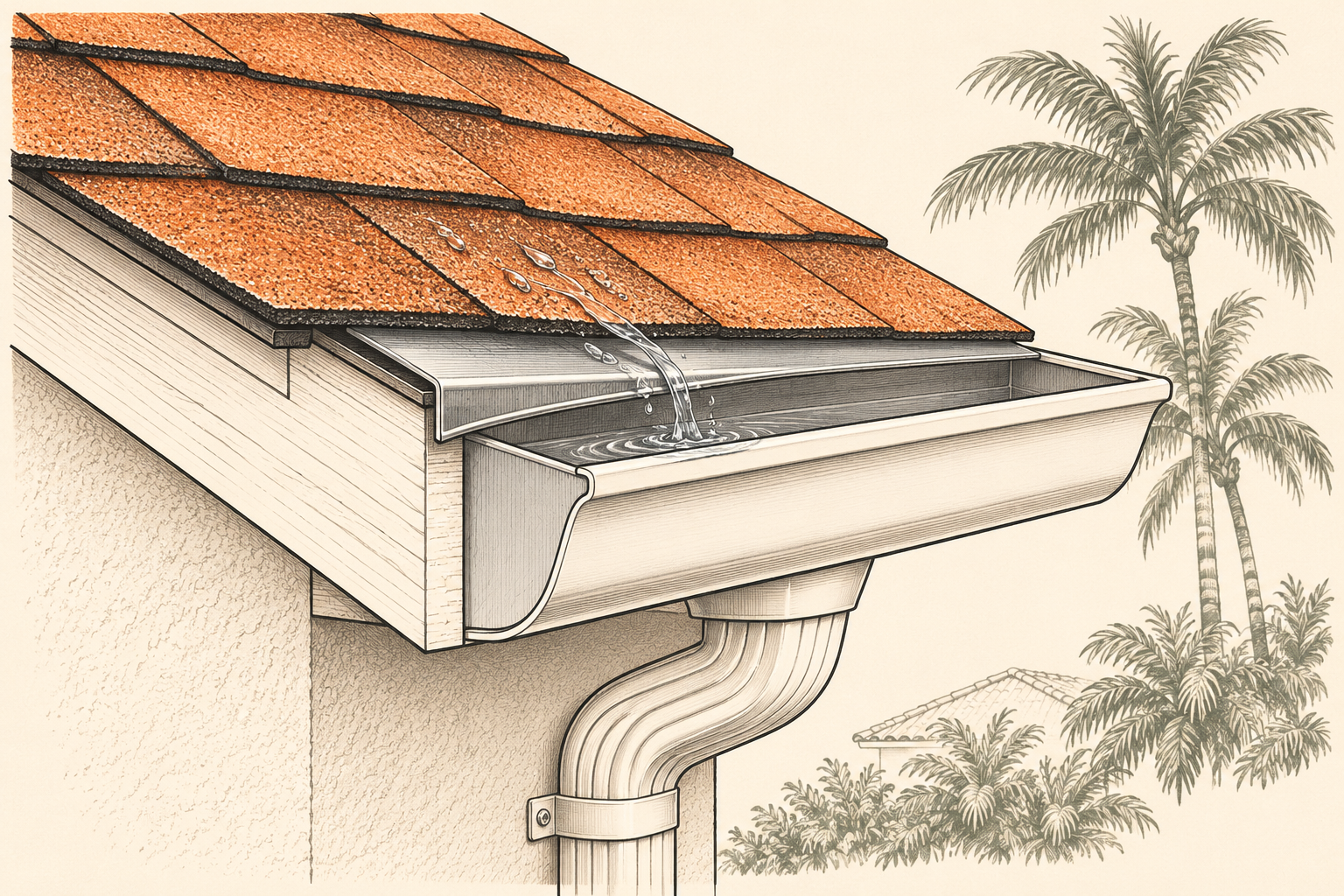
When planning a roof replacement, homeowners often ask whether they should replace the gutters at the same time. The answer depends on the condition of the gutters, how they’re attached, and whether the roof work will affect the gutter system.
A new roof does not automatically mean you need new gutters. But it is a good time to have the roof edge and gutters checked together, before the replacement work begins.
When existing gutters may be fine
Your gutters may be able to stay if they are securely attached, draining properly, and free of significant rust, cracks, sagging, or recurring leaks. The contractor should also confirm that the gutters can be protected during the roof work and that the roof-edge details can be installed correctly.
If the gutters are in good condition, replacing them solely because you’re getting a new roof may be unnecessary.
When replacing gutters may make sense
Consider replacing or repairing gutters if they are:
● Pulling away from the fascia or sagging
● Rusted, cracked, or leaking at joints
● Frequently overflowing despite being clean
● Too damaged to remove and reinstall safely
● Poorly positioned to collect water from the new roof edge
A roof replacement may involve work at the eaves and fascia. If the existing gutters obstruct the work or are already failing, coordinating gutter work with the roofing project may avoid extra removal and installation later.
Don’t overlook the roof edge
The roof edge is a system of connected details. Shingles or other roof coverings, drip edge, fascia, and gutters need to work together to direct water off the roof and away from the home.
Ask your contractor how the roof-edge details will be handled, whether the gutters need to be removed or protected, and whether any fascia repairs are included in the estimate. Get any added work or cost explained before it proceeds.
What to ask your roofing contractor
Before work starts, ask:
1. Can my existing gutters stay in place during the roof replacement?
2. Will they need to be removed and reinstalled?
3. Are repairs to gutters or fascia included in the estimate?
4. How will the roof-edge and drip-edge details connect with the gutters?
5. If replacement is recommended, can I see what condition requires it?
Clear answers help you understand the scope and avoid surprises during the project.
The bottom line
You don’t always need new gutters with a new roof. Their condition, attachment, drainage, and the roof-edge work determine whether they can stay. Have both systems evaluated together so the estimate addresses the full water path from the roof to the ground.
New Roofs Group serves homeowners in Lutz and throughout Tampa Bay. Ask about roof replacement, learn about seamless gutters, or contact us to discuss your project.
FAQs
Should I replace gutters when I replace my roof?
Not necessarily. Gutters in good condition may be able to stay. Have their attachment, drainage, and condition checked alongside the roof edge.
Will roofers need to remove my gutters?
It depends on the gutter type, how it is attached, and the roof work involved. Ask whether removal and reinstallation—or protection in place—is included in the project scope.
Can new gutters be installed after a roof replacement?
Yes. The timing should be coordinated so the roof-edge details are completed properly and the gutters can be attached securely.
What are signs that gutters need repair or replacement?
Sagging, separation from the fascia, rust, cracks, leaking joints, or repeated overflow are reasons to have the gutters assessed.
Does a new roof fix gutter drainage problems?
Not by itself. A roof replacement does not correct clogged, damaged, poorly positioned, or undersized gutters. Those conditions need to be evaluated separately.Do You Need New Gutters When You Replace Your Roof?
Next
Next