When it is time to replace an aging shingle roof, homeowners often ask whether a new layer can simply go over the old one. A roof-over, also called a roof recover, may be possible in some cases. But the condition of the existing roof and Florida Building Code requirements can make tear-off necessary.
For Tampa Bay homes, the decision should start with an inspection of the existing roof assembly—not just a quick look at the shingles from the ground. Here is what homeowners in Lutz, Tampa, Wesley Chapel, Land O’ Lakes, and nearby communities should know.
What does “roof-over” mean?
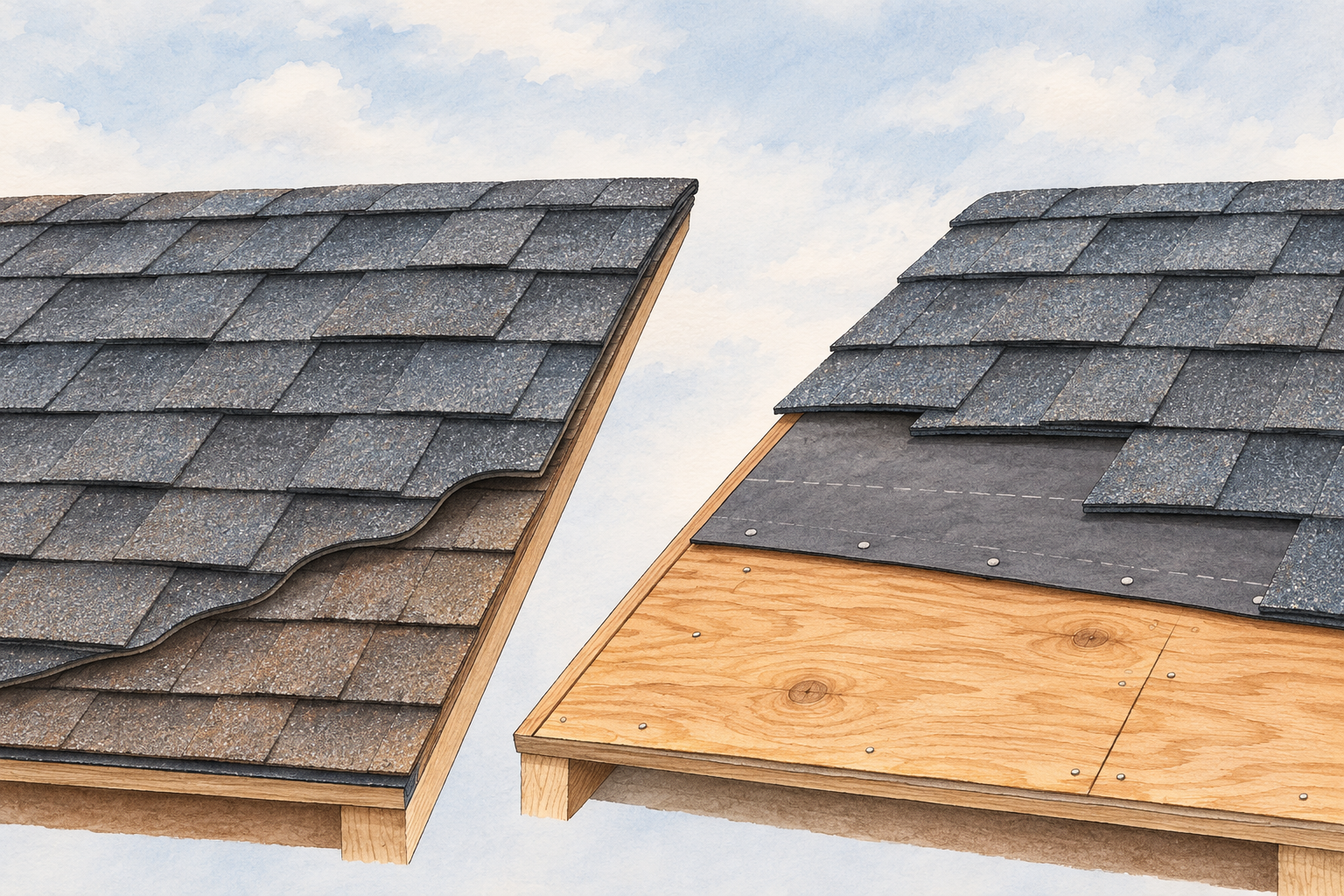
A roof-over means installing a new roof covering on top of an existing roof covering without removing the existing layer. In a shingle roof-over, the new shingles are installed over the old shingles when the existing surface is suitable and the proposed installation meets applicable code and manufacturer requirements.
A roof replacement with tear-off is different: the existing roof covering is removed so the roof deck and underlying components can be inspected before the new system is installed. Learn more about our residential roofing services and roof replacement process.
When may new shingles go over existing shingles?
A roof recover may be considered when there is only one existing roof layer and it is dry, stable, and suitable to serve as a base for the new covering. The roof structure must be able to support the assembly, and the proposed installation must meet applicable code and product requirements.
That does not mean every one-layer roof qualifies. A qualified roofer needs to check the roof’s condition, roof edges and transitions, flashing details, ventilation, and whether the new shingles can be installed correctly over the existing surface. The local building department’s permit and inspection requirements also apply.
When is tear-off required?
Under the currently effective 2023 Florida Building Code, Existing Building, Section 706.3, existing roof coverings generally must be removed down to the roof deck before new coverings are installed if any of the following conditions apply:
The existing roof is water-soaked or deteriorated and cannot serve as an adequate base.
The roof covering is wood shake, slate, clay, cement, or asbestos-cement tile.
The existing roof already has two or more roof-covering applications.
Blisters are present and have not been corrected as permitted by the code.
The existing covering cannot meet the required securement provisions for the new roof system.
The Florida Building Code’s roofing provisions describe these tear-off conditions. The applicable rules can vary by roof system and project details, so the contractor should confirm requirements for the specific property and permit jurisdiction.
Why does tear-off matter in Florida?
Removing old shingles gives the roofing crew access to the roof deck. That makes it possible to identify soft, deteriorated, or otherwise damaged areas that may be hidden under the existing covering. If deck repairs are needed, they can be addressed before the new roof is installed.
A tear-off also provides a clean, more even surface for the new roof system and allows the installer to replace or update components as required by the approved scope and code. In a region exposed to intense sun, heavy rain, and strong winds, the condition and attachment of the complete roof assembly matter—not only the visible shingle surface.
A roof-over can reduce removal work when it is allowed and appropriate, but it conceals the existing covering and deck from direct inspection. It can also add weight and affect details such as roof edges and flashing. The right choice depends on the roof’s actual condition and the complete installation plan.
What about permits and inspections in Tampa Bay?
Do not assume that a roof-over avoids a permit or inspection. Requirements depend on the scope, property location, and applicable rules. Hillsborough County publishes its re-roof inspection information; homeowners should confirm current requirements with the permitting authority for their address. For projects after December 30, 2026, the Florida Building Code, Ninth Edition (2026), is scheduled to take effect, so the code edition applicable to a permit can depend on its submission date.
Questions to ask before choosing a roof-over
Before approving an overlay, ask the roofing contractor:
How many existing roof-covering layers are present?
What did the inspection find about the roof deck, moisture, and shingle condition?
Does the proposed roof-over comply with current code and the shingle manufacturer’s installation instructions?
Will roof edges, flashing, vents, and other details still be installed correctly?
What permit and inspection steps apply to this address?
How will any hidden deck damage be handled if it is discovered during work?
What exactly is included in the written estimate and warranty terms?
A clear answer should explain the roof’s observed condition and the proposed scope, rather than recommending an overlay or tear-off automatically.
So, should you put new shingles over old shingles?
Sometimes a roof-over may be permitted and suitable. In other cases, the roof condition or code requires removal. A roof inspection can help determine which option is appropriate for your home and clarify the work included in each estimate.
New Roofs Group provides roof replacement and repair throughout Tampa Bay, including Lutz, Wesley Chapel, Land O’ Lakes, and Tampa. If you are weighing a roof-over against a full tear-off, request a roof estimate and ask us to explain the condition of your existing roof and the scope we recommend.
Frequently asked questions
Can I put a second layer of shingles over my existing shingles in Florida?
It may be possible when there is only one existing layer, the roof is suitable as a base, and the proposed installation meets applicable code and manufacturer requirements. An inspection is needed to evaluate the specific roof.
When does Florida code require shingles to be removed before reroofing?
The 2023 Florida Building Code, Existing Building, Section 706.3, lists conditions that require removal to the roof deck, including an inadequate or water-soaked base, certain roof-covering materials, two or more existing applications, uncorrected blisters, or securement conditions that cannot be met.
Is a roof-over always cheaper than a tear-off?
Not necessarily. Costs depend on the roof, access, materials, repairs, and project requirements. Compare written estimates with the same scope, and ask what happens if the crew finds damaged decking or other concealed issues.
Does a roof-over hide damage to the roof deck?
Yes. Because the existing covering remains in place, the deck cannot be inspected across the roof surface in the same way it can after a tear-off. If there are signs of moisture or deterioration, have a professional assess whether removal is needed.
Do I need a permit for a roof-over in Hillsborough County?
Permit and inspection requirements depend on the specific scope and property. Check with the permitting authority for the property address and review Hillsborough County’s current re-roof information before work begins.