
What Should a Tampa Bay Roofing Estimate Include? 8 Items to Compare
When two roofing estimates have very different totals, the lower number may not describe the same work. Before comparing prices, compare the scope. A clear estimate should help you understand what will be installed, what is included, and how unexpected conditions will be handled.
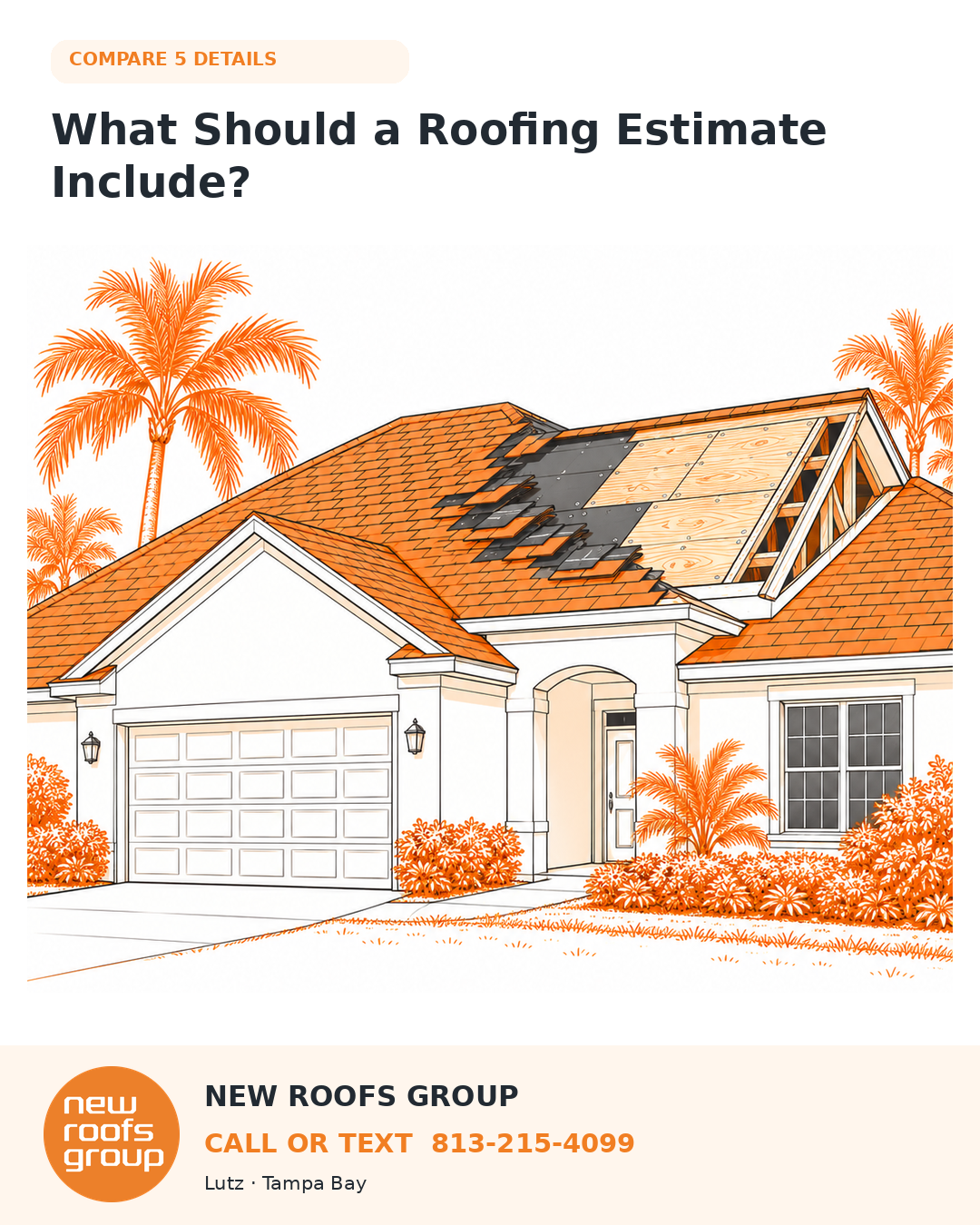
The illustration groups eight estimate points into five categories. Use this checklist to compare the written scope of a Tampa Bay roofing estimate. If you are still learning what happens during installation, see our roof replacement process guide.
1. Roofing system and materials
The estimate should identify the roofing material and the main components that go with it. For a shingle roof, ask which shingle product and underlayment are included, along with ridge caps and other system components. For metal, tile, or a low-slope roof, the proposal should identify the system being installed and the relevant accessories. “New roof” alone is too broad to compare accurately.
Make sure the proposed material matches your home, roof design, and budget. You can learn more about NRG’s residential shingle roofing and ask us about other systems for your property.
2. Tear-off, flashing, and site protection
Confirm whether removal of existing roof layers, hauling, and disposal are included. The proposal should also explain how the crew plans to protect landscaping, driveways, windows, and nearby areas from normal installation activity. Ask what access the crew will need and where materials or a dumpster may be placed.
Roof edges, valleys, vents, skylights, and roof-to-wall intersections need careful attention. Ask whether the estimate includes new flashing or describes which existing flashing will remain. The scope should be clear about the details most relevant to your roof rather than relying on a vague phrase such as “standard installation.”
3. Decking, permits, and inspections
The condition of the roof deck may not be fully visible until the old covering is removed. Ask how the contractor will document any damaged decking, how added work will be priced, and how you will approve a change before the work proceeds. A written process helps prevent surprises and gives both sides a clear record.
Ask who will obtain the required permit, coordinate inspections, and provide closeout documents. Responsibilities can vary by project and jurisdiction, so the estimate or contract should say who handles each step. Keep copies of the permit information and final paperwork with your home records.
4. Cleanup, schedule, and payment
Confirm what cleanup is included and how the contractor checks the work area for nails and roofing debris. Ask what the final walkthrough or completion process looks like, and whether you will receive project photos or other documentation.
The estimate should describe the anticipated start window, factors that could affect timing, how weather delays will be communicated, and the payment schedule. Ask who your point of contact will be and how you can reach them if questions arise during installation.
5. Warranties, exclusions, and change orders
Review manufacturer coverage and workmanship coverage separately. Ask what each warranty covers, how long it lasts, and what conditions or exclusions apply. The estimate should also identify work that is not included and explain how changes to the scope are documented and approved.
Compare scope before choosing a price
Put the estimates side by side and compare the same items: roofing system, removal, flashing, decking process, permits, cleanup, schedule, payment terms, warranty, and exclusions. If something is missing, ask the contractor to clarify it in writing before signing. A detailed proposal makes it easier to compare bids and reduces confusion once work begins.
New Roofs Group serves homeowners across Lutz and Tampa Bay. If you would like help understanding a proposal or need an estimate for your roof, contact our team or call/text 813-215-4099.
Frequently asked questions
Why are roofing estimates different in price?
Estimates may cover different materials, roof details, removal, decking allowances, permit responsibilities, cleanup, warranties, or exclusions. Compare the written scope before comparing totals.
Should a roof estimate include replacement of damaged decking?
Because decking conditions can be hidden before tear-off, the estimate should explain how damaged areas will be identified, priced, documented, and approved if they are discovered.
What should I ask about roofing warranties?
Ask for the manufacturer and workmanship warranty terms separately. Review duration, coverage, exclusions, and any steps required to keep the coverage in effect.
Should I choose the lowest roofing estimate?
Price matters, but first confirm that each estimate includes comparable materials, installation details, permits, cleanup, and warranty terms. Ask contractors to explain any unclear or missing items.